Why Comedy Clubs Offer a Different Kind of Night Out
Comedy clubs sit somewhere between theatres, bars, restaurants, and social venues. They are built around live performance, but many also include food, drinks, table service, shared seating, and close contact between performers and the audience.
The Audience Is Part of the Experience
Stand-up comedy depends on immediate audience reaction. Performers can hear when a joke lands, notice when a section loses momentum, and adjust their pacing in real time. Some comedians shorten material, add improvised comments, or spend more time interacting with a particular part of the room. This responsiveness makes live comedy feel very different from watching a recorded special at home.
Audience participation does not mean constant conversation. Most performers need enough quiet to establish rhythm and deliver material clearly. Laughing, applauding, and responding when directly addressed are natural parts of the show. Repeated shouting, private conversations, or attempts to become the centre of attention can disrupt both the comedian and nearby guests.
The Venue Shapes the Atmosphere
A small basement club creates a different experience from a theatre or festival stage. In an intimate room, performers can see individual faces and hear quiet comments. Crowd work may become a bigger part of the show, and guests can feel closely involved in what happens on stage.
Larger venues offer a different kind of energy, with more formal seating, stronger production, and less direct interaction. Neither format is automatically better. The size, layout, service style, and audience capacity simply influence how the show feels and what guests should expect from the evening.
Comedy Clubs Are Social Spaces Too
A comedy show may be part of a birthday, a date, a group night out, or an evening with colleagues. Many venues encourage guests to arrive early, have a drink, order food, and spend time together before the show begins.
That social atmosphere needs to change once performers take the stage. Conversation that feels normal in the bar area can become distracting inside the performance room. Well-run clubs make that transition clear while still keeping the environment relaxed and welcoming.
How a Comedy Night Works From Start to Finish
The audience usually sees only the finished performance, but a comedy night starts long before the first comedian steps onto the stage. Staff prepare the room, check bookings, test equipment, arrange seating, coordinate performers, and organise food and beverage service.
By the time the doors open, many practical decisions have already been made. The aim is to make the evening feel straightforward for guests even though a large team may be working behind the scenes.
Before the Doors Open
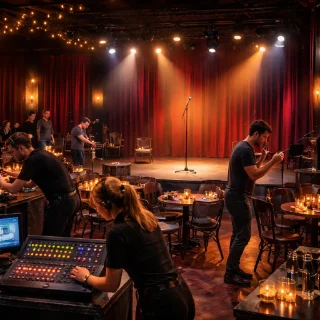
Venue staff may begin preparing hours in advance. Tables and chairs are arranged according to ticket sales, microphones are tested, bars are stocked, and the running order is confirmed with performers. Staff may also review accessibility requests, group bookings, reserved seating, and any changes to the lineup.
Technical preparation is especially important because stand-up depends on clear speech. A faulty microphone or distracting lighting can affect the whole room. Good preparation reduces the number of issues that need to be solved once the audience arrives.
Arrival, Tickets, and Seating
Door staff may check tickets, identification, age requirements, or booking names. Some clubs use assigned seats, while others place guests according to party size and arrival time. In smaller venues, different groups may share a table because space is limited.
Arriving early gives guests time to find their seats, order a first drink, visit the restroom, and settle in. Late arrivals can be difficult to seat without interrupting the performer, particularly when the room is dark or tables are close together.
Openers, Features, and Headliners
Most comedy nights feature more than one performer. A host or emcee usually welcomes the room and introduces the acts. An opener may perform a short set, followed by a feature comedian with more stage time. The headliner generally closes the show with the longest performance.
This structure creates variety and gives comedians at different stages of their careers valuable stage time. Lineups can occasionally change because of illness, travel, scheduling conflicts, or other practical issues, so some flexibility is part of attending live entertainment.
The People Who Keep a Comedy Club Running
A comedian may be the most visible person in the room, but a show depends on many other roles. Some employees work directly with guests, while others focus on scheduling, production, safety, administration, and talent.
Servers and Bartenders
Serving food and drinks during live comedy requires a particular style of hospitality. Staff need to communicate with customers while keeping noise low. They often work in dim lighting, move through narrow spaces, and time deliveries around applause or louder moments in the set.
Guests can help by deciding what they want before a server arrives, keeping walkways clear, and having payment ready when needed. Bills may be presented before the final act ends so staff can close multiple accounts efficiently without creating a rush after the show.
Hosts, Door Staff, and Managers
Front-of-house staff answer questions, check bookings, organise queues, explain venue rules, and help guests find their seats. They may also handle accessibility requests, late arrivals, customer concerns, and changes to seating.
Managers oversee the wider operation, including staffing, ticketing problems, alcohol service, safety procedures, performer needs, and communication between departments. If a situation becomes difficult or disruptive, managers are usually responsible for deciding how the venue should respond.
Bookers and Technical Crews
Bookers and producers shape the entertainment by choosing performers, arranging schedules, and planning lineups. Their work influences the character of a club and the balance between established comedians, touring acts, and newer talent.
Sound and lighting crews support what happens on stage. The microphone needs to be clear, lighting should focus attention on the performer, and music or other cues must happen at the right time. When production works well, the audience barely notices it.
From Open Mics to Headline Shows
Most comedians develop through repetition, testing, rewriting, and many hours on stage. Open mics, showcases, club spots, and feature sets allow performers to discover what works in front of different audiences.
The path is rarely identical for everyone, but real audience feedback remains one of the most important parts of developing stand-up material.
Why Open Mics Matter

Open mics are often where new comedians first test jokes. A performer may receive only a few minutes of stage time, forcing them to make quick decisions about what to try. Some material works immediately, while other jokes require different wording, stronger setups, or complete replacement.
These nights are partly workshops, so the standard can vary. Experienced comedians may use them to experiment, while beginners learn how to use a microphone, handle silence, and manage nerves. For audiences, open mics offer a chance to see comedy while it is still being developed.
Building a Strong Set
As comedians gain experience, they connect individual jokes into longer routines. A reliable short set may lead to showcases, while stronger fifteen- or twenty-minute performances can support feature bookings.
The process is not simply about adding more jokes. Performers think about pacing, transitions, callbacks, topic changes, and where their strongest material should appear. A set may change repeatedly before it feels finished, and even experienced comedians continue adjusting small details.
What Headlining Requires
A headline set can last forty-five minutes, an hour, or longer. Maintaining attention for that period demands structure, confidence, flexibility, and enough strong material to recover when a section does not work as expected.
Touring adds another challenge because audiences vary between cities and venues. Experienced comedians learn to adjust their pacing and interaction without losing their own style. A polished headline show may therefore represent months or years of writing and repeated live testing.
What to Know Before Going to a Comedy Club
A little preparation can prevent common problems. Comedy clubs vary in age limits, seating policies, food service, minimum purchases, accessibility, phone rules, and arrival expectations.

Checking these details before leaving home can make the evening more relaxed for both guests and staff.
- Check whether the listed time means doors or show time. Some tickets display the performance time, while others highlight when entry begins.
- Review age restrictions. Licensing rules, alcohol service, or the content of a show may affect who can enter.
- Look for minimum purchase requirements. Some clubs require guests to order food or drinks in addition to buying a ticket.
- Check the seating policy. General admission, assigned seating, and first-come systems create different expectations.
- Ask about accessibility in advance. Step-free access, wheelchair spaces, toilets, hearing support, and seating options vary by venue.
- Plan transport with flexibility. Live shows can finish later than expected because of breaks, crowd interaction, or changes to the running order.
Venue rules are generally designed to keep the room safe, comfortable, and compliant with local licensing requirements. Reading the ticket terms before attending is more reliable than assuming that every club follows the same system.
Comedy Club Etiquette for a Better Audience Experience
Comedy is informal, but the room still works best when guests follow a few basic rules. These expectations are not designed to make the atmosphere rigid. They protect the performance and help everyone hear and enjoy what is happening on stage.
Keep Phone Use to a Minimum
A bright phone screen can be surprisingly distracting in a dark venue. It draws attention from nearby guests and may also be visible from the stage. Calls, message alerts, camera flashes, and videos create even more disruption.
Recording may be restricted because comedians often test material that has not been released. Some venues ban photography and video entirely, while others allow limited use before or after the show. Guests should follow the policy stated by the venue or performer.
Know the Difference Between Participation and Heckling
Some comedians use crowd work and regularly ask audience members questions. Responding naturally in that situation can become part of the entertainment because the performer controls the interaction.
Heckling is different. Repeatedly shouting comments, finishing jokes, or trying to start a separate conversation can interrupt the set and affect everyone else. The simplest approach is to react naturally while allowing the comedian to decide when direct audience participation is appropriate.
Limit Conversations During Sets
Private conversations can carry farther than people realise. In a small club, even quiet talking may distract nearby tables or be audible from the stage. If something needs to be discussed, keeping it brief or waiting for a break is usually better.
The same applies to moving around the room. Guests may need to visit the restroom or leave early, but doing so during applause or between acts can reduce disruption.
Food, Drinks, Service, and Tipping
Many comedy clubs rely on food and beverage service as part of the overall experience. Guests may order before the show, during sets, or during scheduled breaks, while staff have to balance hospitality with the need to keep the room quiet.
Understanding how service works in a live venue can prevent unnecessary frustration. The pace may differ from a normal restaurant because the performance influences when employees can move and speak.
Why Service Feels Different During a Show
Servers may wait for a louder moment before approaching a table, avoid lengthy explanations during quiet sections, or delay collecting glasses until applause. These decisions help reduce distractions.
Guests can make the process easier by keeping orders clear and having payment ready. A check presented before the headliner finishes does not necessarily mean the venue expects the table to leave. It may simply be part of the system used to close accounts efficiently.
Tipping and Local Expectations
Tipping practices vary by country, city, and venue. In places where gratuities are a normal part of hospitality, comedy club servers and bartenders are generally treated similarly to employees in restaurants and bars.
Guests should check whether a service charge has already been included, particularly for larger groups. Where tipping is optional, the amount remains a personal decision based on local custom and the service received.
Handling Problems Respectfully
An order may be delayed, a seat may have a poor view, or a ticketing problem may need to be corrected. Raising the issue calmly gives staff the best chance to solve it without disturbing the show.
Safety concerns deserve immediate attention. Harassment, threatening behaviour, serious intoxication, medical problems, or dangerous conditions should be reported to staff or management. Venues may involve security or emergency services when necessary.
A Great Comedy Night Is More Than the Jokes
Comedy clubs work because performers, staff, and audiences each play a different role. The comedian brings the material, the venue provides the space and support, and the audience contributes the attention and reaction that make live performance possible.
Understanding those roles makes a night out easier to navigate and more enjoyable. Arriving on time, following venue policies, treating staff respectfully, limiting distractions, and allowing performers to control the room are small choices with a noticeable effect. When everything comes together, a comedy club becomes more than a place to hear jokes. It becomes a shared live experience built by everyone in the room.